
Booking App Development Cost in India (2026 Price Guide)
The booking app development cost in India depends on the type of booking platform you want to build, the features it requires, the number of user roles, and the complexity of its backend. A simple appointment-booking app for a local business will generally cost less than a multi-vendor platform for hotels, travel, healthcare, or on-demand services.
For startups and established businesses, a booking app can simplify appointment scheduling, reduce manual work, manage availability, accept online payments, and improve the customer experience. However, the total investment depends on whether you need a basic booking system or a complete platform with customer accounts, service-provider dashboards, notifications, payment processing, and analytics.
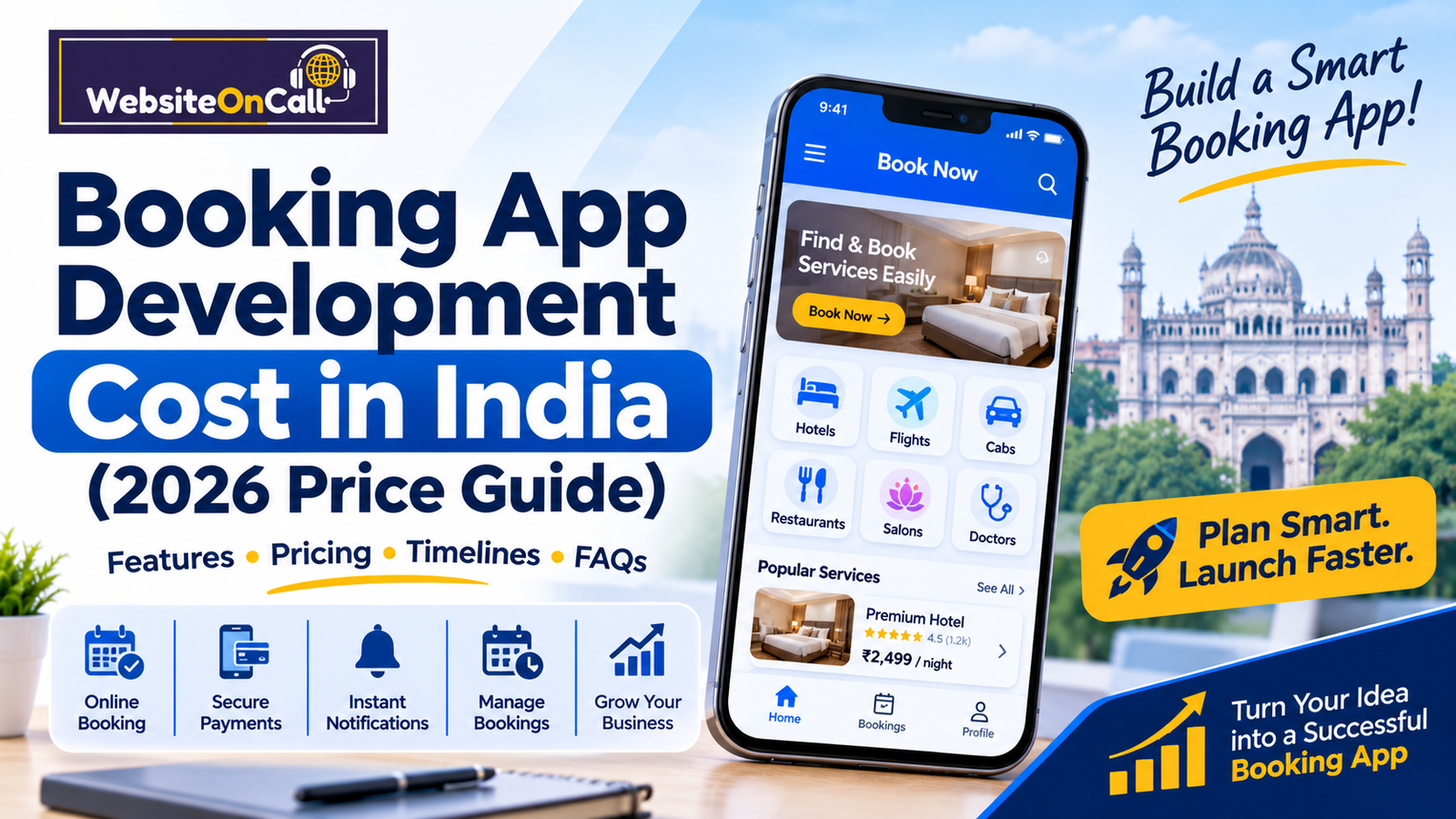
In this guide, we cover indicative 2026 booking app development prices in India, app types, essential features, development timelines, ongoing expenses, cost-saving strategies, and frequently asked questions.
How Much Does Booking App Development Cost in India?
Booking app development in India may start at around ₹1.5 lakh for a basic application and reach ₹25 lakh or more for a feature-rich booking platform. Complex platforms with multiple service providers, real-time availability, location tracking, advanced payment workflows, and separate applications for different users can require a higher budget.
The following figures are illustrative budgeting estimates, not verified market averages or fixed quotations.
|
Booking app type |
Estimated development cost |
Estimated timeline |
|---|---|---|
|
Basic appointment-booking app |
₹1.5 lakh–₹4 lakh |
4–8 weeks |
|
Standard booking app |
₹4 lakh–₹8 lakh |
8–12 weeks |
|
Advanced booking app |
₹8 lakh–₹15 lakh |
3–5 months |
|
Multi-vendor booking platform |
₹12 lakh–₹25 lakh+ |
4–8 months |
|
Enterprise booking platform |
₹25 lakh+ |
6 months or more |
Actual pricing depends on the app’s features, design, backend, admin panel, integrations, testing, deployment, and support requirements.
1. Basic Booking App: ₹1.5 Lakh–₹4 Lakh
A basic booking app is suitable for small businesses that want customers to schedule appointments or reserve services online.
Typical features include:
-
User registration and login
-
Service listings
-
Available dates and time slots
-
Appointment booking and cancellation
-
Basic booking confirmation
-
Customer profile
-
Simple admin dashboard
-
Basic notifications
This type of app may work well for salons, consultants, tutors, small clinics, fitness trainers, and other appointment-based businesses.
2. Standard Booking App: ₹4 Lakh–₹8 Lakh
A standard booking app provides a more complete customer experience and gives businesses better control over their schedules and bookings.
Common features include:
-
Advanced search and filters
-
Calendar and availability management
-
Online payment integration
-
Booking history
-
Automated reminders
-
Customer reviews and ratings
-
Discount codes or coupons
-
Service-provider management
-
Reports and booking analytics
This option is suitable for growing businesses that need to handle more customers, services, and appointments.
3. Advanced Booking App: ₹8 Lakh–₹15 Lakh
Advanced booking applications support more complex workflows, multiple user types, and additional automation.
Features may include:
-
Separate customer and service-provider accounts
-
Real-time availability updates
-
Multiple locations or branches
-
Dynamic pricing and service durations
-
Refunds and cancellation rules
-
Push notifications and automated reminders
-
Maps and location-based discovery
-
Advanced admin controls
-
Integration with CRM or accounting systems
This budget range may suit growing service businesses and startups that need a more customized booking experience.
4. Multi-Vendor Booking Platform: ₹12 Lakh–₹25 Lakh+
A multi-vendor booking platform allows different providers to list their services and receive bookings through a common application.
For example, a platform might connect customers with hotels, travel providers, event venues, tutors, or home-service professionals.
Typical requirements include:
-
Customer, vendor, and administrator accounts
-
Vendor registration and approval
-
Service listings and availability
-
Booking and payment management
-
Commission calculations
-
Vendor payouts
-
Reviews and ratings
-
Dispute and cancellation workflows
-
Sales reports and platform analytics
The cost increases when the platform requires separate mobile apps, complex commissions, real-time synchronization, or sophisticated vendor management.
5. Enterprise Booking Platform: ₹25 Lakh+
Enterprise booking platforms are designed for organizations with complex operations, high booking volumes, multiple branches, or specialized integration requirements.
They may include advanced access controls, centralized reporting, integrations with existing business systems, custom pricing rules, detailed audit logs, and infrastructure designed for high availability.
A technical assessment and a clearly documented scope are essential before estimating an enterprise project accurately.
Booking App Development Cost by Business Type
The cost of a booking app also depends on the industry and the business model. Each industry requires different booking rules, user journeys, and integrations.
|
Booking app type |
Key features |
Indicative cost |
|---|---|---|
|
Salon and spa booking app |
Service selection, staff schedules, appointments |
₹2 lakh–₹6 lakh |
|
Doctor appointment app |
Doctor profiles, slots, reminders, patient bookings |
₹3 lakh–₹8 lakh |
|
Hotel booking app |
Room availability, reservations, payments |
₹5 lakh–₹15 lakh |
|
Travel booking app |
Trips, packages, itineraries, booking management |
₹5 lakh–₹18 lakh |
|
Event booking app |
Event listings, tickets, seat selection |
₹4 lakh–₹12 lakh |
|
Home-service booking app |
Service providers, scheduling, location, payments |
₹5 lakh–₹15 lakh |
|
Multi-vendor booking marketplace |
Vendor accounts, commissions, payouts, reviews |
₹12 lakh–₹25 lakh+ |
These are indicative planning ranges. Actual prices depend on whether the project includes one app or multiple apps, backend development, vendor dashboards, third-party integrations, and operational workflows.
Essential Features of a Booking App
Essential Features of a Booking App
The features you choose have a direct impact on the development budget. Start by identifying the functionality your customers and team need most.
1. User Registration and Login
Customers should be able to create accounts, sign in, manage their profiles, and access their booking history. Depending on the app, authentication may use email, phone numbers, or supported social sign-in methods.
2. Service Listings and Search
The app should display available services, prices, descriptions, photos, locations, and other relevant information. Search and filtering help customers find the right service without navigating through unnecessary screens.
3. Calendar and Availability Management
A booking system needs to show available dates and time slots while preventing conflicting reservations. The complexity depends on whether bookings involve individual staff, shared resources, rooms, venues, or multiple service providers.
4. Online Payments
Payment integration can allow customers to pay in advance, pay a deposit, or complete the transaction after receiving the service.
Payment-related features may include:
-
Secure checkout
-
Payment status tracking
-
Booking confirmation after payment
-
Refund and cancellation workflows
-
Digital receipts
-
Coupons and discounts
Payment gateway charges and other transaction-related fees are generally separate from the app development cost.
5. Push Notifications and Reminders
Notifications can confirm bookings, remind customers about upcoming appointments, and communicate cancellations or schedule changes. Email and SMS reminders may involve separate service charges.
6. Admin Dashboard
An admin dashboard enables the business to manage bookings, users, services, availability, payments, and reports from one place.
For multi-vendor platforms, additional dashboards may be needed so vendors can manage their own listings, schedules, bookings, and earnings.
7. Reviews and Ratings
Reviews can help customers evaluate service quality and make informed decisions. The app may need controls for submitting reviews, moderating content, and reporting inappropriate feedback.
8. Reports and Analytics
Reports can show booking volume, revenue, cancellations, popular services, customer activity, and provider performance. Advanced analytics generally require more development effort than basic booking reports.
What Factors Affect Booking App Development Cost in India?
1. App Complexity
A simple appointment scheduler requires less work than a booking marketplace with real-time availability, vendor payouts, and dynamic pricing. More complicated business rules mean additional design, development, and testing.
2. UI/UX Design
A clean, intuitive interface makes it easier for users to discover services and complete bookings. Custom designs, complex interactions, animations, and separate interfaces for different user types can increase the budget.
3. Number of Platforms
Developing for Android only, iOS only, or both platforms affects the initial scope. Cross-platform frameworks such as Flutter and React Native can share much of the codebase, although some platform-specific functionality may still require separate work.
4. Backend and Database
The backend handles bookings, users, schedules, payments, notifications, and business rules. Systems that need real-time availability or synchronization across several providers require more complex architecture and testing.
5. Third-Party Integrations
Depending on the booking model, integrations may include:
-
Payment gateways
-
Maps and location services
-
SMS and email services
-
Calendar applications
-
Video consultation services
-
Hotel or travel inventory providers
-
CRM and accounting software
Some providers charge recurring subscription, usage, or transaction fees. These should be included in the operating budget.
6. Security and Data Protection
Booking applications may store customer contact details, appointment records, payment references, and other personal information. Appropriate authentication, access controls, secure data transmission, backups, and testing should be considered from the beginning.
7. Development Team
A freelance developer, a small agency, and a full-service app development company may provide different levels of planning, design, testing, project management, and support. Compare the complete deliverables instead of selecting a provider solely on the basis of the initial price.
Booking App Development Cost: Native vs. Cross-Platform
|
Development approach |
Indicative budget |
Best suited for |
|---|---|---|
|
Android app |
₹1.5 lakh–₹10 lakh+ |
Businesses prioritizing Android users |
|
iOS app |
₹2 lakh–₹12 lakh+ |
Businesses prioritizing Apple users |
|
Cross-platform app |
₹3 lakh–₹15 lakh+ |
Startups launching on both platforms |
|
Separate native Android and iOS apps |
₹5 lakh–₹25 lakh+ |
Apps needing extensive platform-specific functionality |
These ranges are illustrative and overlap because the number and complexity of features matter more than the technology label alone.
For many startups, cross-platform development can be a practical way to launch on Android and iOS while limiting duplicated work. The final decision should account for performance requirements, integrations, developer expertise, and long-term maintenance.
How Long Does It Take to Develop a Booking App?
|
Development stage |
Estimated duration |
|---|---|
|
Requirement analysis and planning |
1–2 weeks |
|
UI/UX design |
1–3 weeks |
|
App and backend development |
3–10 weeks |
|
Integrations and testing |
1–4 weeks |
|
Deployment and launch preparation |
1–2 weeks |
Some stages can overlap. A basic booking app may take approximately 4–8 weeks, while a complex multi-vendor platform may need several months.
The timeline depends on the scope, availability of feedback, integration complexity, and whether Android, iOS, and web-based admin interfaces are being developed together
Hidden Costs of Booking App Development
The development quotation is only one part of the total cost of operating a booking app.
|
Expense |
What it covers |
|---|---|
|
Hosting and cloud services |
Servers, databases, storage, and backups |
|
App store accounts |
Applicable developer account fees |
|
Payment gateway fees |
Transaction charges and payment-related services |
|
SMS and email |
Booking confirmations and reminders |
|
Maps and location APIs |
Location searches and mapping services |
|
Maintenance |
Bug fixes, updates, and compatibility changes |
|
Security |
Monitoring and security improvements |
|
Marketing |
Advertising and customer acquisition |
|
Future enhancements |
Additional features and workflow improvements |
|
Customer support |
Handling booking issues and user enquiries |
Annual Maintenance Cost
As a preliminary budgeting guideline, consider reserving approximately 15%–25% of the initial development cost per year for maintenance and technical support. This is not a fixed industry rate.
For example, for an app that costs ₹5 lakh to develop, a preliminary maintenance allowance of ₹75,000–₹1.25 lakh annually may be worth considering. Hosting, third-party services, marketing, and major new features may cost extra.
How to Reduce Booking App Development Cost
Startups and small businesses can manage their budget by prioritizing the most important features.
Start with an MVP: Launch with the core booking journey, availability management, confirmations, and essential admin tools.
Choose features carefully: Add advanced analytics, loyalty programmes, and complex automation only when they are needed.
Use existing services: Integrate reliable payment, notification, and mapping services instead of building everything from scratch.
Select the right platform: Evaluate cross-platform development if you need Android and iOS support.
Finalize requirements early: Clear specifications reduce unnecessary rework.
Plan for future growth: Build a foundation that can accommodate more users, services, and locations without requiring a complete rebuild.
Compare detailed quotations: Review design, development, testing, deployment, source code ownership, and post-launch support.
Booking App Development Process
A structured development process helps ensure that the final product matches your business requirements.
Requirement analysis: Define the business model, user roles, booking rules, and essential features.
Planning and UI/UX design: Map customer journeys and prepare screen designs and prototypes.
App development: Build the mobile application, backend, database, and admin dashboard.
Integration: Connect payment gateways, notifications, calendars, or other required services.
Testing: Validate booking availability, payments, cancellations, notifications, and user permissions.
Deployment: Prepare and submit the application to the relevant app stores and configure production services.
Maintenance: Monitor performance, fix issues, and introduce improvements as the business grows.
How to Choose a Booking App Development Company in India
Before selecting a development partner, evaluate:
Relevant experience: Look for projects involving bookings, scheduling, payments, or service marketplaces.
Transparent pricing: Ask for an itemized quotation and written scope.
Technology expertise: Confirm experience with your required platforms and integrations.
Testing process: Ensure critical booking and payment flows will be tested.
Ownership terms: Clarify access to source code, documentation, data, and developer accounts.
Post-launch support: Check maintenance terms, response times, and charges for additional work.
Scalability: Discuss how the app can support future features and increasing booking volumes.
For businesses looking for tailored mobile application solutions, explore our App Development Services in Lucknow.
Frequently Asked Questions
1. What is the booking app development cost in India in 2026?
A basic booking app may cost around ₹1.5 lakh–₹4 lakh, while standard apps may cost ₹4 lakh–₹8 lakh. Advanced and multi-vendor platforms can cost ₹8 lakh–₹25 lakh or more, depending on the features and integrations.
2. What is the minimum cost to build a booking app?
A simple appointment-booking MVP may be possible from around ₹1.5 lakh. The final cost depends on whether the project includes a backend, admin dashboard, payment integration, and custom scheduling rules.
3. How much does an appointment-booking app cost?
A basic appointment app for a salon, consultant, or small service business may fit within an indicative budget of ₹1.5 lakh–₹4 lakh. More advanced systems with online payments, multiple staff members, reminders, and reporting may cost more.
4. How much does a hotel booking app cost?
A hotel booking app may require an indicative budget of ₹5 lakh–₹15 lakh or more. Features such as room inventory, booking modifications, payment processing, cancellation rules, and external hotel inventory integrations can increase costs.
5. How much does a multi-vendor booking app cost?
A multi-vendor booking platform may cost approximately ₹12 lakh–₹25 lakh or more. Vendor onboarding, separate dashboards, commissions, payouts, reviews, and complex booking rules affect the final estimate.
6. Is Flutter suitable for a booking app?
Flutter can be suitable for booking applications that need Android and iOS support from a shared codebase. Suitability depends on required integrations, performance needs, and the development team’s expertise.
7. How long does booking app development take?
A basic app may take around 4–8 weeks. A standard application may require 8–12 weeks, while an advanced booking marketplace can take several months.
8. Does the development cost include online payment integration?
It depends on the proposal. Confirm whether payment integration, testing, refunds, transaction status handling, and related deployment work are included. Payment gateway transaction fees are generally separate.
9. What are the ongoing costs of a booking app?
Ongoing costs may include hosting, maintenance, third-party APIs, payment fees, app store account fees, customer support, and marketing. These expenses depend on the app’s complexity and usage.
10. Can a booking app be customized for my business?
Yes. Booking applications can be customized for salons, clinics, hotels, travel agencies, event organizers, educational services, and home-service businesses. The required features and workflows determine the development cost.
11. How can I get an accurate booking app development quotation?
Prepare a list of required features, target platforms, user roles, booking rules, integrations, and admin requirements. Share the scope with a development company and request an itemized proposal covering development, deployment, and ongoing support.
Conclusion
The booking app development cost in India depends on the type of booking platform you want, its essential features, the number of users and providers, and the integrations required. A basic appointment-booking app can be a practical starting point for a small business, while a multi-vendor marketplace needs a larger investment in backend development, dashboards, payment workflows, and testing.
Before beginning development, define the core booking journey, compare platform options, and budget for ongoing maintenance as well as the initial build.
Planning to build a booking app for your business? Explore our App Development Services in Lucknow to discuss your requirements and development goals.